TURNING GENERATIONS INTO REGENERATION
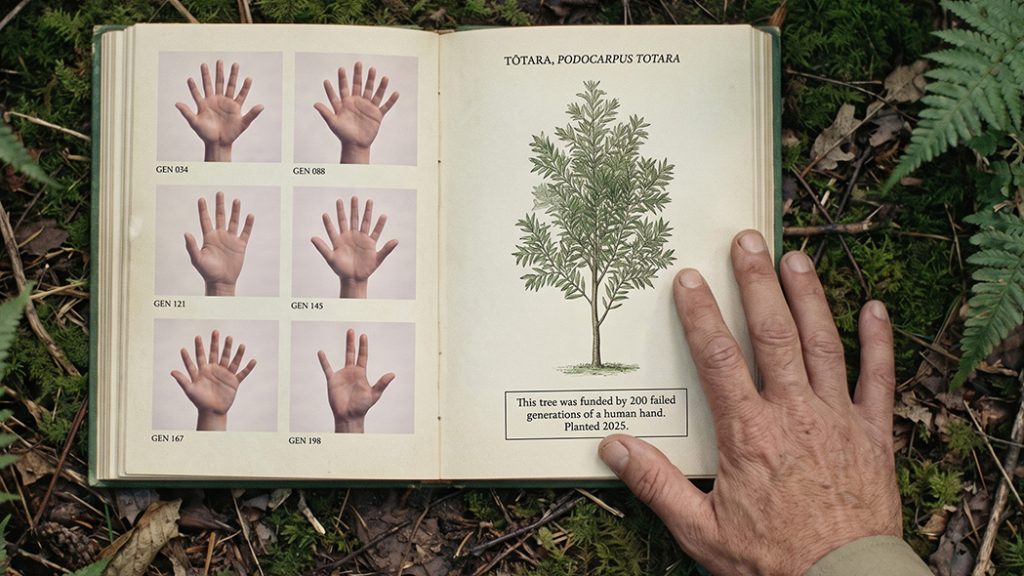
A distributed native forest grown one production at a time. For each production Odd Global plants native trees through Banks Peninsula Conservation Trust.
Trees planted
A.I. productions
Odd Global creates work that often begins and ends in a digital environment. The Odd Forest ensures that every completed production also leaves something tangible growing in the physical world.
How the Odd Forest works
Every completed Odd Global production adds native trees to the Odd Forest.
The number of trees is determined by considering the overall scale of the project and its approximate use of image and video generation. A small production may add a smaller number of trees. A larger or more generation-intensive production will add more.
The trees may be planted across different restoration sites throughout Te Pātaka o Rākaihautū Banks Peninsula. Together they form one growing distributed forest.
“What’s particularly exciting about this partnership is that it creates an opportunity for Odd Global’s clients who are embracing artificial intelligence to also make a tangible contribution to nature, supporting conservation outcomes here on Banks Peninsula.”
Maree Burnett – BPCT General Manager
Each tree is part of something larger than an individual planting. Native planting can help restore habitat and strengthen connections between ecosystems and create better conditions for indigenous plants and wildlife.
The trees of the Odd Forest contribute to wider ecological restoration work across Banks Peninsula.
Their value is not expressed only through carbon. They are also a practical investment in biodiversity and habitat and long-term ecological resilience.
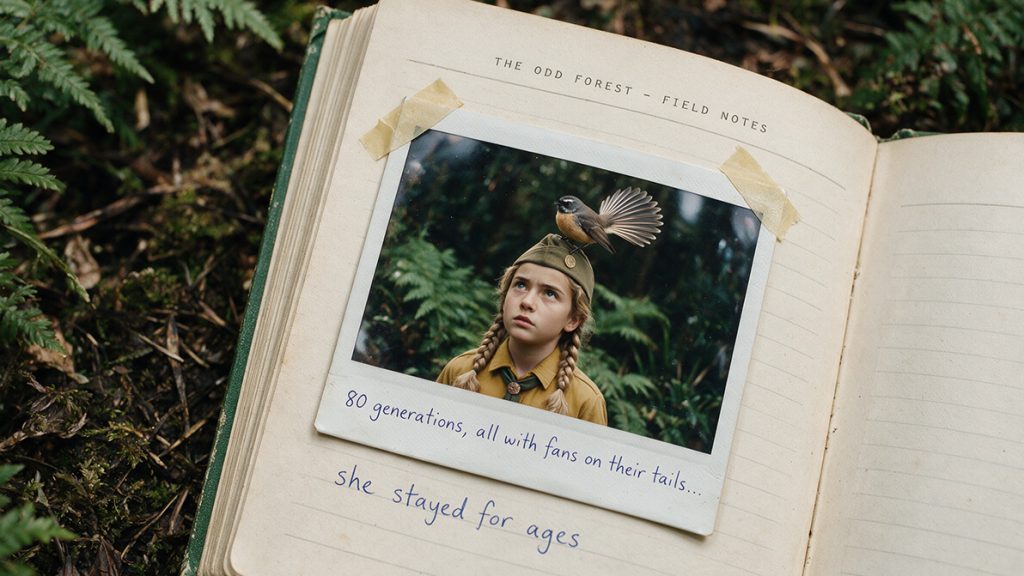
What The Odd Forest supports
a contribution of
$50 NZD per tree
that covers

Tree
The purchase of an appropriate native tree

Planting
The professional labour required to plant it

Maintenance
Initial maintenance to support its establishment
Why a distributed forest
The Odd Forest is not defined by a fence or a single piece of land. Its trees may be planted across different Banks Peninsula Conservation Trust restoration sites according to ecological need and planting opportunities.
Together they form one ongoing body of native planting supported by Odd Global and the productions we create. Every new project adds more trees. Every tree becomes part of a wider effort to restore habitat and help native ecosystems thrive.
Odd Global is based in Ōtautahi Christchurch. We wanted this initiative to support meaningful conservation work that is local and visible and connected to a long-term ecological vision.
Banks Peninsula Conservation Trust is a community-led conservation organisation working towards a future where native ecosystems thrive and nature regenerates.
Its work extends beyond planting and includes habitat protection and restoration as well as pest management and community engagement. BPCT works alongside landowners and local communities and conservation partners to help protect and reconnect ecosystems across Banks Peninsula.
Why Banks Peninsula Conservation Trust
How the number of trees is determined
The environmental footprint of generative production can vary considerably. Different image and video systems use different models and infrastructure and energy sources. Production workflows also vary according to the number of generations and duration of video outputs and amount of refinement required.
For that reason we do not claim that one tree represents a precise quantity of production emissions. Instead we use the scale and generation intensity of each project to determine a practical planting contribution.


Carbon in context
Native forests absorb and store carbon over decades but the amount attributable to one tree varies according to species, location, planting density and survival. New Zealand forestry guidance therefore measures carbon across areas of forest rather than assigning one universal figure to every tree. Regenerating native forest has been estimated to absorb roughly 5 to 7 tonnes of CO₂ per hectare each year depending on its age and condition. [Source: Ministry for Primary Industries]
AI generation is similarly variable. Recent research has measured roughly 0.09 to 4.1 watt-hours for one generated image and approximately 0.14 to 415 watt-hours for a short generated video across different open models and settings. Video generation can therefore use tens or sometimes more than one hundred times the energy of an image. [Source: arXiv]
These figures provide context rather than a project-level carbon calculation. The Odd Forest does not match one tree to a fixed number of generations or present the planting as a certified carbon offset.
What The Odd Forest is not
The Odd Forest is not a certified carbon-offset programme.
We do not claim that planting trees fully compensates for the energy used during a production. We also do not claim that it balances the full environmental impact of training generative models or operating the infrastructure behind them.
It is a practical commitment to recognise that digital production has a physical footprint and to direct part of every completed project towards native planting and ecological restoration.